Weltschmerz - KBK
Weltschmerz (German, “world-pain”) — The melancholy or sadness experienced when the reality of the world falls short of your ideals or expectations.
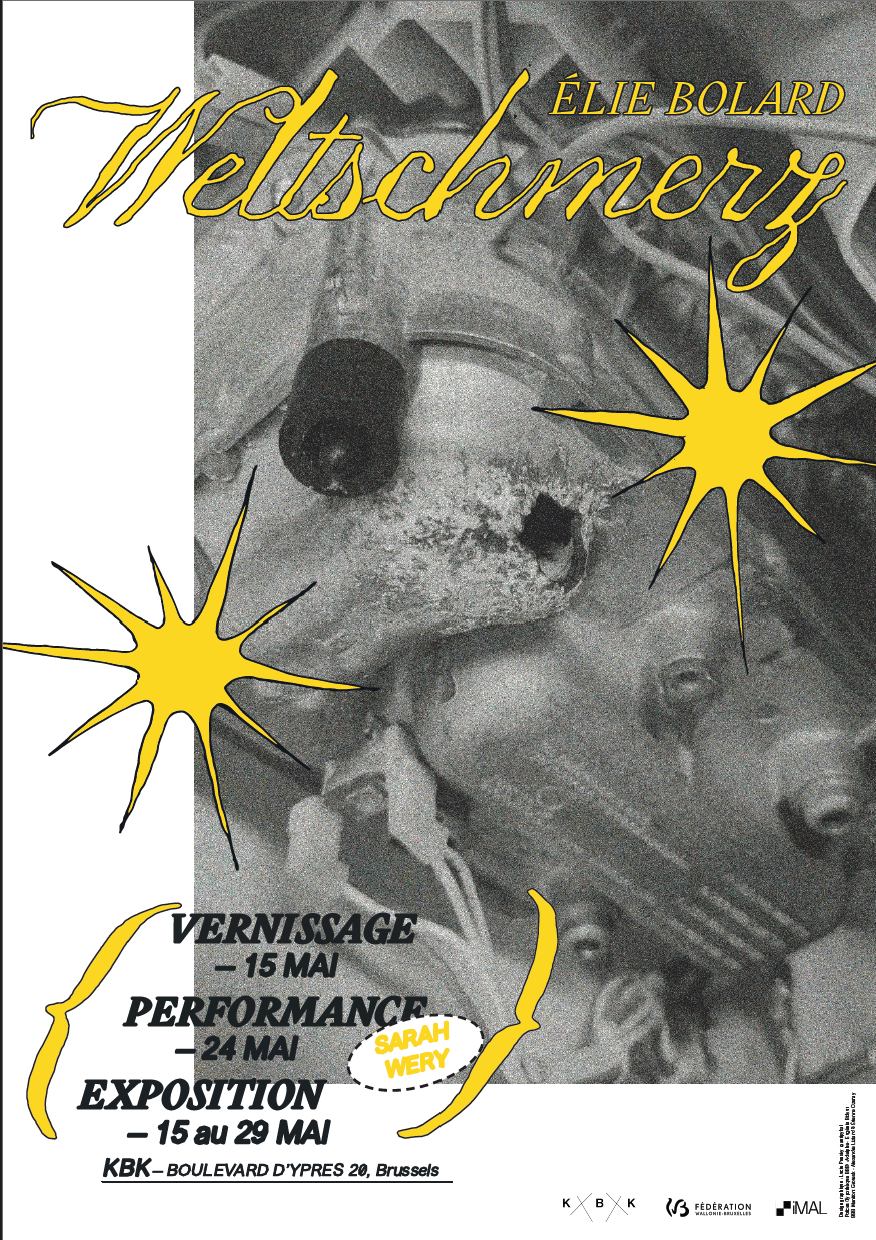
The 19th-century German literary term Weltschmerz forms the starting point of Élie Bolard’s solo exhibition. Evoking a deep sense of disappointment and exhaustion with the world,Bolard’s mechanical installations transform KBK’s space into an absurd symphonic protest against what is considered to be ‘normal’. Much like a contemporary “danse macabre”, abandoned objects and industrial parts are reassembled and choreographed to perform unexpected gestures and sounds, gaining at the same time agency to question their own existence.
Their clumsy, often humorous performances stand in contrast to the precision and predictability of their original functions. In liberating these everyday technologies from their former roles, Bolard’s assemblages grant them a new kind of consciousness, allowing them to act, sound, and even think for themselves. The result is an ironic critique of the standardised systems and human processes that have brought our ecologies and social ethics to the brink of collapse.
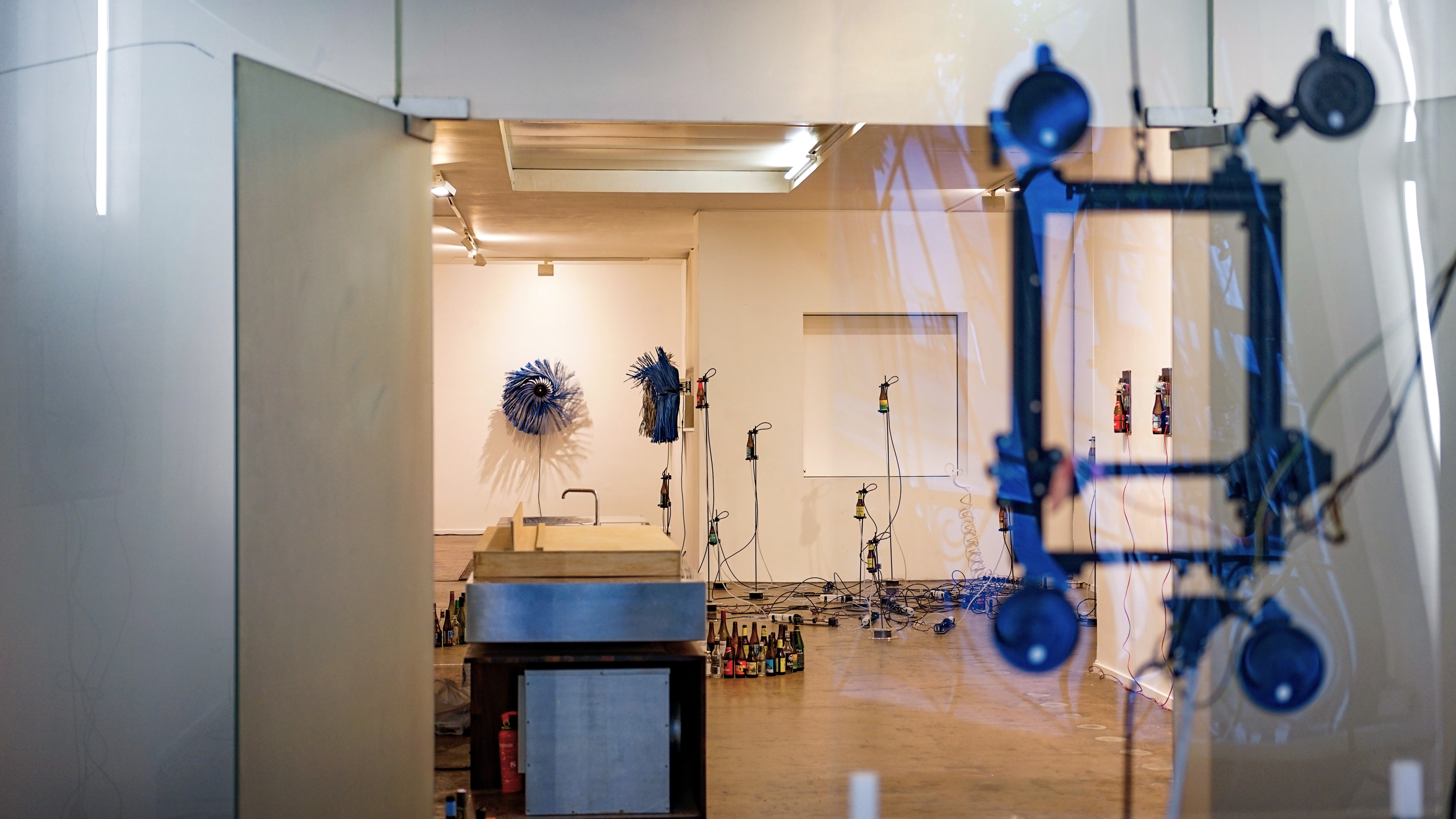
At the entrance of KBK, one encounters the Dés-Affections ; three robotic fingers mimicking the inherent human need to be remembered to leave a trace, however temporary, upon the world. The automated robots draw from a selection of traces collected by Élie Bolard from abandoned buildings, dusty surfaces, or any other medium where a finger leaves a mark. Chosen randomly from his personal archive, these once-anonymous gestures are now reanimated through the machines. Like the original creators of these marks, the robots operate behind a veil of anonymity, carrying messages never meant to be noticed, in a cry for recognition of their existence. Will these messages reach the other side of the glass pane—or will they, too, vanish in the passage of time?
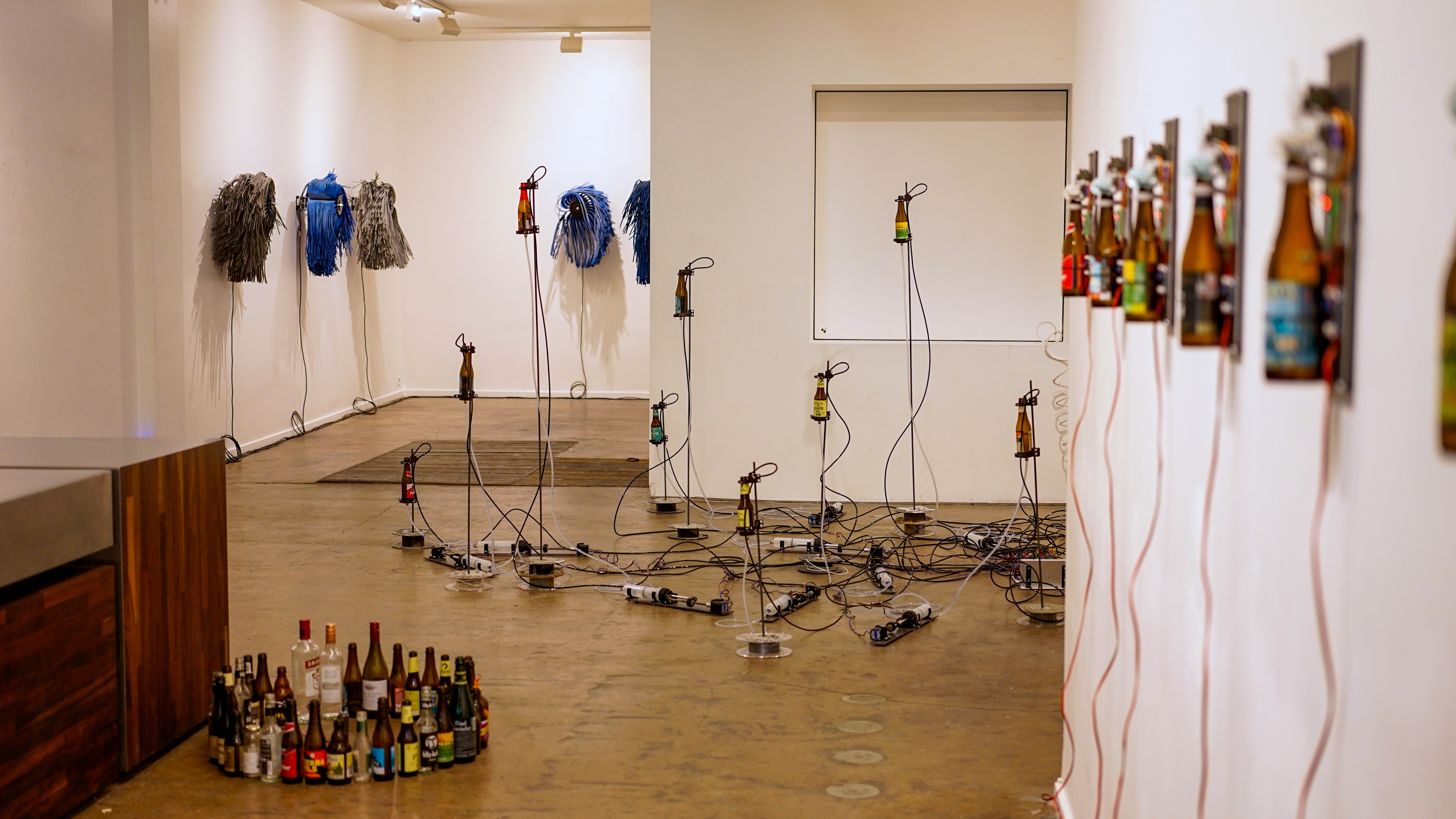
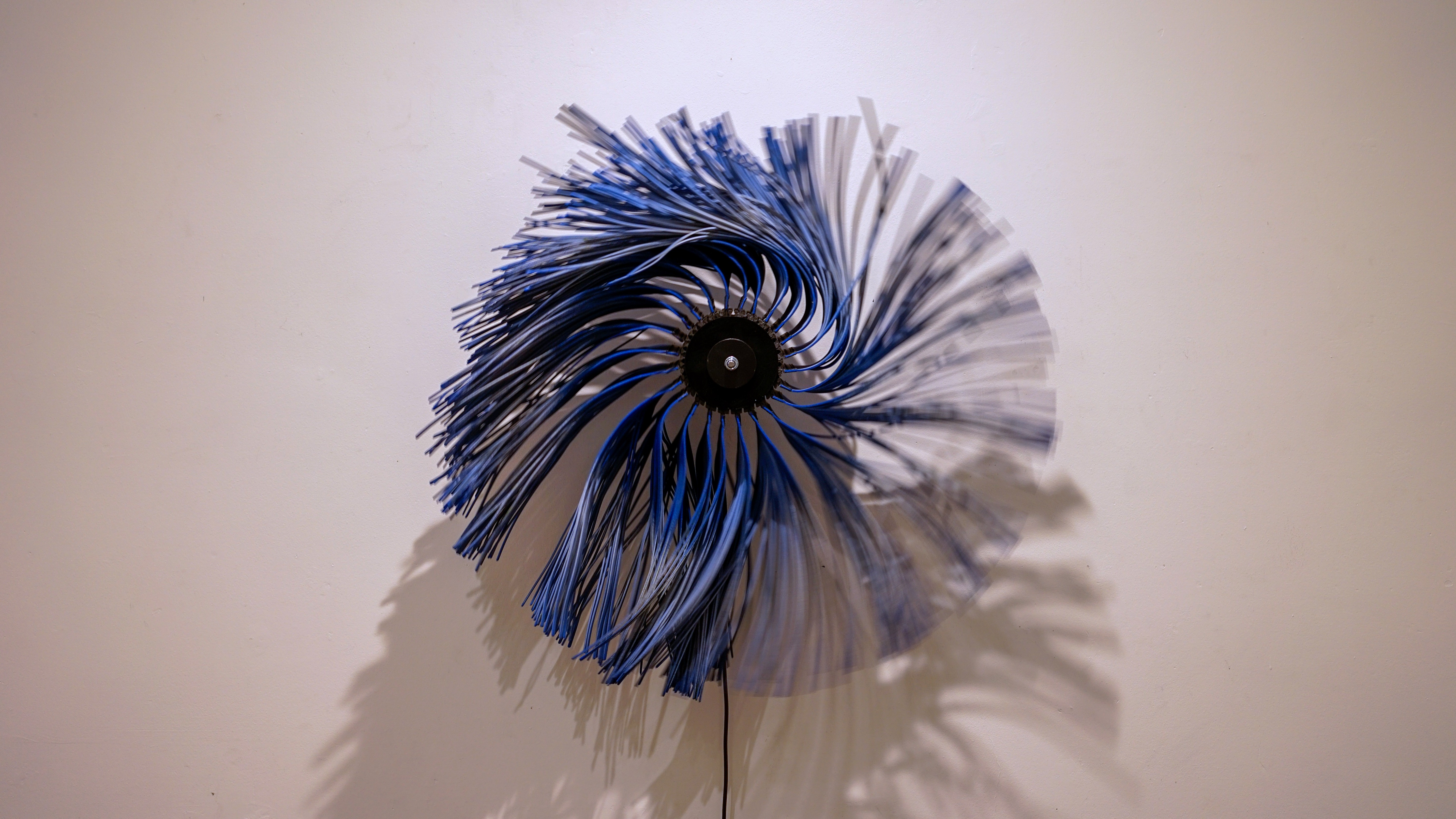
In the main room, Void loop(), Les Siffleuses, and the newly produced works Vidange and Orexis engage in a dynamic dialogue—creating a sonic and kinetic playground where the familiar becomes uncanny.y. Void loop () composed of six second-hand car wash brushes, disrupts the familiarity of their “natural” movements by removing the mechanical infrastructure that once defined their purpose. Freed from their humanimposed constraints, the brushes explore a kind of absurd autonomy. Through clumsy repetition and distorted gestures echoing their former labor routines, they reintroduce themselves as animated, rebellious, and strangely self-aware.
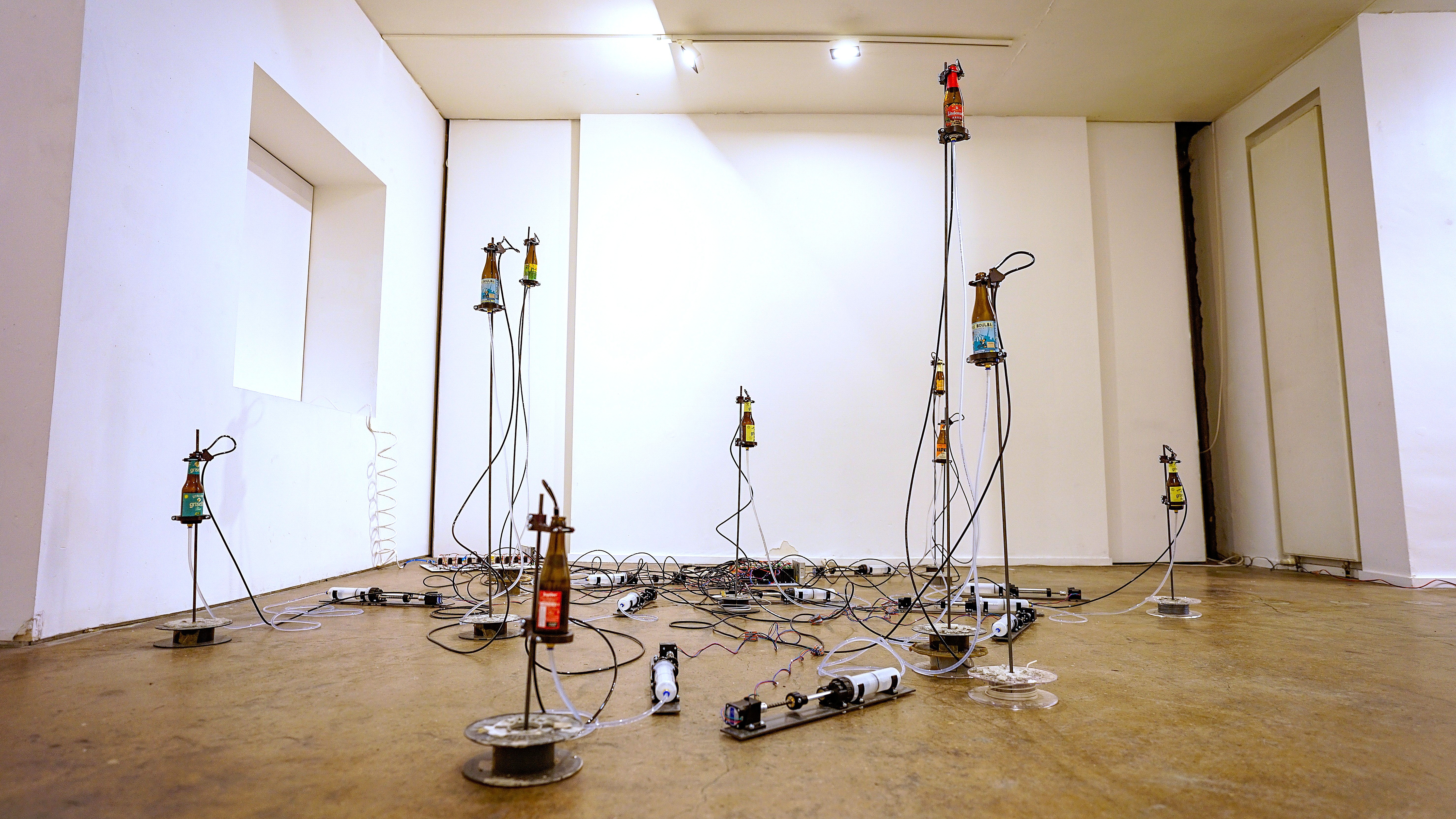
Les Siffleuses, Orexis, and Vidange form a ritualistic constellation of empty beer bottles, each installation exploring the latent sonic possibilities of these discarded vessels. Removed from their role as consumer objects, the bottles find voice through subtle, surreal interactions. As mechanical engines gently interact with their surfaces, the bottles echo familiar sounds of air blowing through their edges, a finger pulled from their edge, a spoon tipping their body. These playful and surreal sonic experiments suggest new forms of expression for the once-discarded objects, giving them an unexpectedly social and vocal presence. The three installations will be activated in a one-time performance by Sarah Wéry. Introducing a human layer to the automatic sequences designed by Bolard, Wery’s musical performance will directly respond to the installations in the space, defying their rhythm for the duration of the exhibition. Together, these experiments push the boundaries of how we experience sound and objecthood. Amplified through scenographic elements—such as illuminated bottles arranged across the floor and stacks of beer crates forming visual rhythms—Bolard turns the gallery into an immersive laboratory of material transformation and sonic play.
These installations will be activated during a one-time live performance by artist Sarah Wéry, who will intervene in the automated sequences with human intuition and improvisation. Using a piano interface, Wéry will control the brushes’ tempo and interact with the bottles as instruments, temporarily reorienting the system’s rhythm with her own. In this moment, the boundaries between performer and machine, spontaneity and automation, dissolve into a shared choreography. No longer as parts of a greater machine, Bolard’s installations re-enter the social sphere on equal terms. Not there to serve but to participate and engage with, these mechanical beasts confront us with a question both humorous and profound: What happens when the inanimate refuses to remain silent ? In this tension—between control and chaos, purpose and play—Weltschmerz reveals itself not only as sorrow, but as a form of resistance. A refusal to accept the world as it is, and imagining what else might be.
Drawing from the 19th-century German concept of ‘weltschmerz’—a melancholic realisation that reality falls short of our ideals—Élie Bolard’s solo exhibition transforms the KBK gallery into a mechanical protest against the absurdity of the everyday. Through his kinetic and sound installations assembled by abandoned objects, industrial debris, and reanimated machines, Weltschmerz stages a darkly humorous “danse macabre” of post-functional technology. In Bolard’s world, robotic fingers mourn forgotten traces (Dés-Affectations), car wash brushes reclaim their autonomy (Void loop()), and empty beer bottles find their voice in collective rhythms (Les Siffleuses, Vidange, and Orexis). These ritualistic sculptures challenge the systems that shaped them, reject silence and servitude and reclaim their place in society as conscious entities. They ridicule, question, and resist human-imposed functions in an attempt to find a voice beyond their original functions. A one-time live performance by Sarah Wéry will activate the installations introducing a human response to Bolard’s mechanical choreographies. In Weltschmerz, sorrow becomes resistance. This is a world in revolt—mechanical, absurd, and unexpectedly alive.
Texts : Ismini Kyritsis Sound design and performance : Sarah Wéry Prosthetist : Emma Bougaeff Programming support : Louanne Deltenre Intern & Graphic Design : Lucie Pensivy Special thanks : Luke Makris, William Delgrande, Louise Wadier, Callista Damiani
←